Vision
A future where every neurodivergent child can access stories presented in ways that reflect how they understand, communicate and learn.
Pre-launch prototype for research and feedback — NeuroStory Library is currently in development and is not yet a live children’s service.
NeuroStory Library
NeuroStory Library is a SEND-focused adaptive storytelling platform designed to adjust language, cognitive demand, sensory detail and communication format to support emotions, routines, transitions and everyday learning.
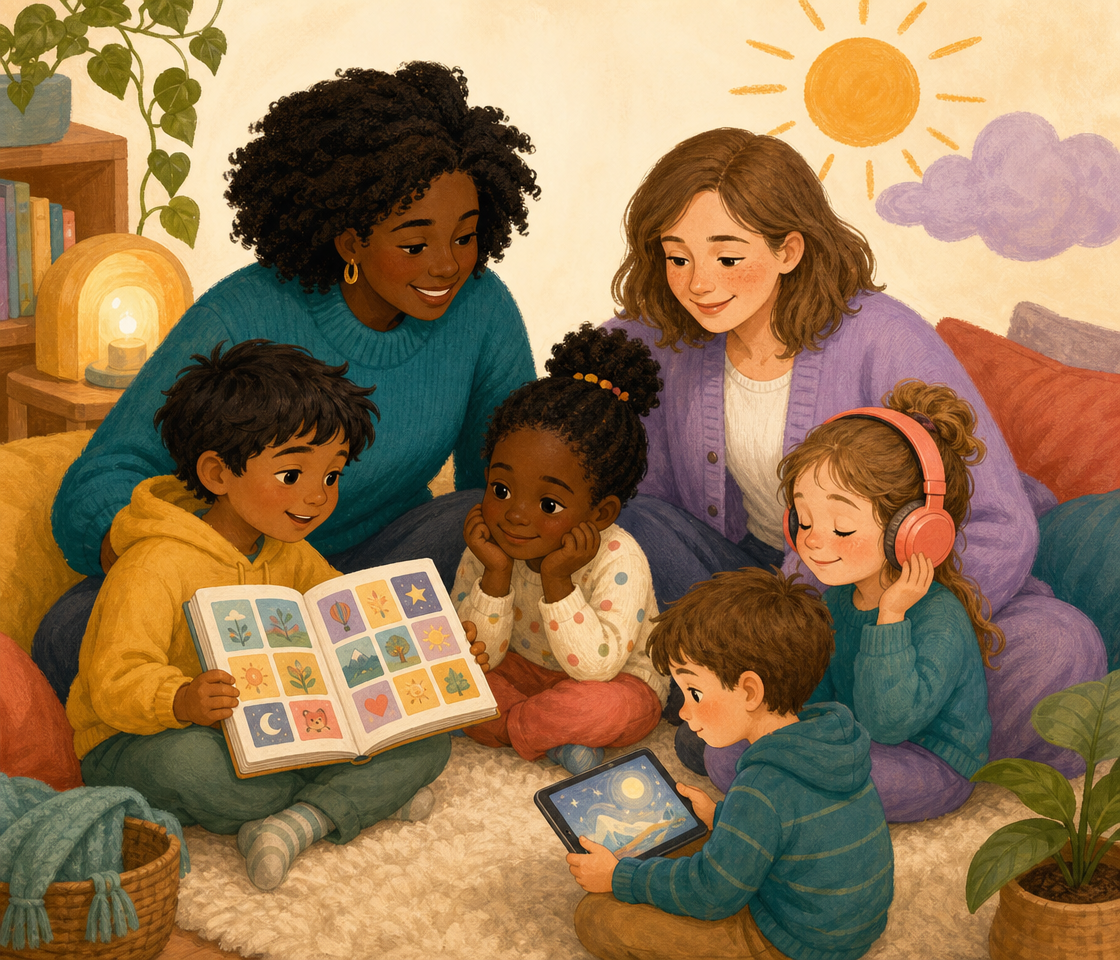
The same situation — a school morning, a hospital visit, a new bedtime routine — can need very different language, cognitive demand, communication formats and sensory presentation depending on the child. NeuroStory Library is designed so a trusted adult can present the same story in the way that fits a child today, and adjust it as they grow.
Recognising, naming and moving through feelings in familiar contexts.
Predictable daily sequences at home, at school and in between.
Preparing for changes — small moments and larger life shifts.
Practical skills that support growing confidence and self-reliance.
An adult selects language level, cognitive load, communication format and sensory preferences.
The same situation is presented in the format that fits the child today.
Stories can be read as text, listened to as audio or supported with visual sequences.
Trusted adults capture what supported the child, refining future presentations.
From short, literal sentences to richer, more descriptive phrasing.
How much a child is asked to hold in mind at once.
Text, read-aloud audio or symbol-supported visual sequences.
For example, a calmer or more energetic presentation of the same story.
Familiar characters, settings and details that anchor understanding.
The everyday moment the story is helping the child prepare for.
The interactive demonstration walks through the Getting Ready for School story in different presentation formats. It uses fictional data and pre-written examples so adults can explore how the finished experience might feel.
Choose how the story is presented.
Preview — Simple
The first version will focus on personalised text and read-aloud audio stories, with optional symbol-supported visuals. Future development may include video stories, adult dashboards, progress insights and EHCP-informed support pathways.
Personalised text stories with optional symbol-supported visuals.
Planned first MVP
Narrated read-aloud audio, providing an audiobook-style way to experience the story.
Planned first MVP
A device-generated read-aloud demonstration is available in the prototype. Final narrated audio remains planned for the first MVP.
Animated and video versions of adaptive stories.
Video is not included in the current prototype or first MVP.
An earlier proof-of-concept survey received 41 parent and caregiver responses. The findings below use the 40 responses for which anonymous research use was authorised. This was early exploratory feedback, not a representative or clinical study.
83%
33 of 40 consenting respondents answered Yes or Maybe when asked whether a personalised story platform could be helpful.
80%
32 of 40 selected Calm/Energetic presentation modes as a desired feature in the earlier proof of concept.
55%
22 of 40 selected short stories designed to support focus.
Other selected features included emotion-based story choice (20 of 40) and read-aloud or narration (17 of 40). These early findings informed continued exploration of adaptable presentation, shorter story options and read-aloud support. Independent SEND professional feedback is now being sought to shape the first MVP.
A future where every neurodivergent child can access stories presented in ways that reflect how they understand, communicate and learn.
To develop accessible, adaptive stories and adult-facing tools that tailor language, cognitive load, communication format and sensory presentation to individual SEND needs, while helping parents and professionals understand what supports each child over time.
Current prototype
This interactive prototype demonstrates the planned experience using fictional data and pre-written examples.
Planned first MVP
Planned later development
Founded by Elizabeth Daniel, NeuroStory Library is being developed through market research, verified early parent and caregiver feedback, and ongoing prototype testing. Independent SEND professional feedback is now being sought to shape the first MVP.